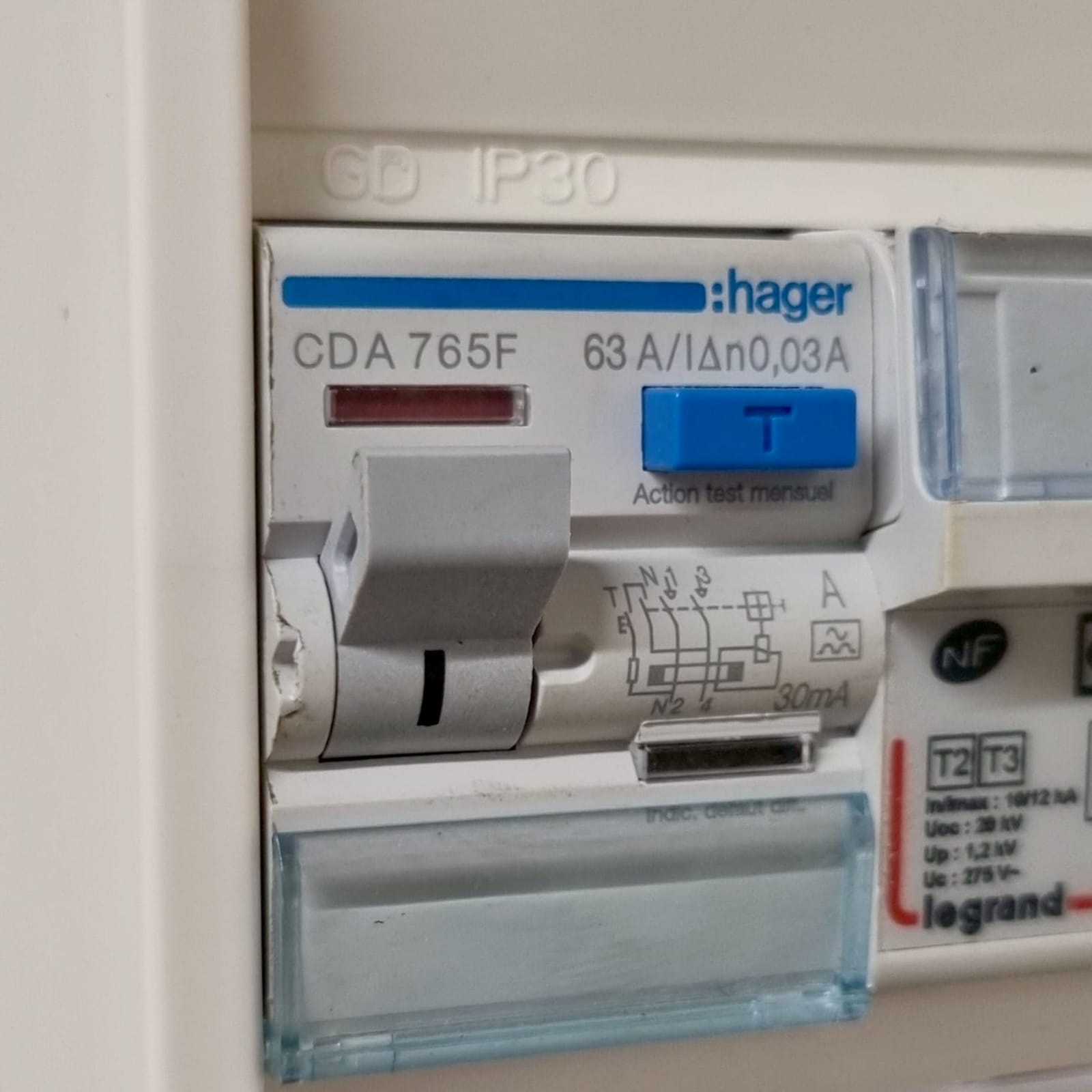
RCD
The RCD protects several circuits at once: a leak on one circuit drops the whole row, which is the main reason for nuisance trips.
Published 20 August 2026
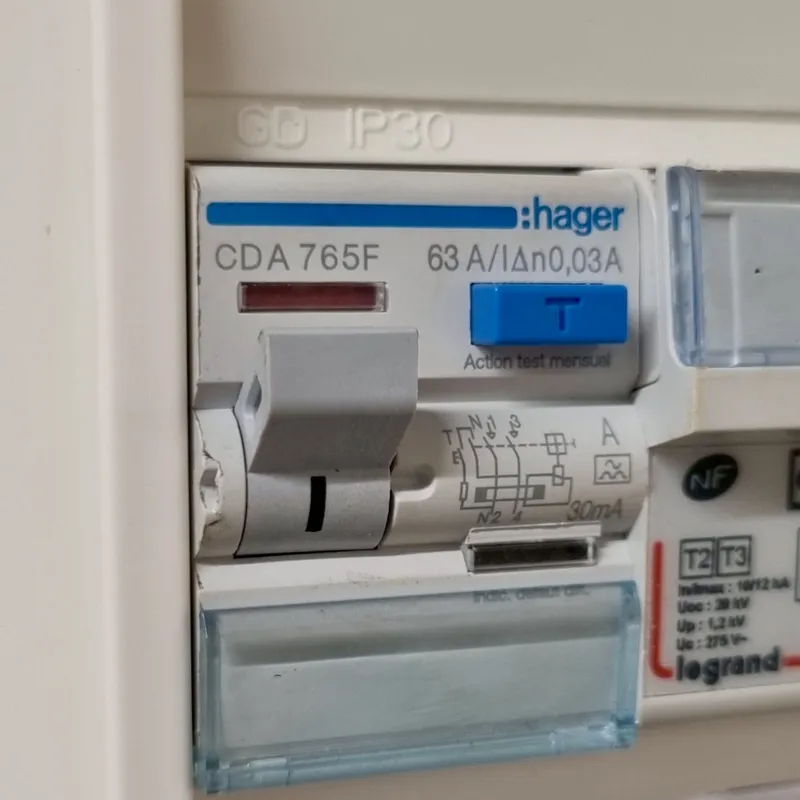 Photo : Sparx Elec image library
 In brief
An RCD and an RCBO both protect people against electric shock, but they are not the same device. An RCD, or Residual Current Device, monitors the balance of current in a circuit and cuts power almost instantly if it detects electricity leaking to earth. An RCBO combines that shock protection with the overload and short-circuit protection of an MCB, so it protects both people and wiring in a single unit.
The core distinction between an RCD and an RCBO lies in discrimination and circuit isolation. A traditional RCD protects an entire bank of circuits against earth leakage alone, meaning one faulty kettle drops the whole row. An RCBO combines earth leakage, overload, and short-circuit protection into an individual module, ensuring faults remain strictly confined to the affected circuit.
1
circuit protected by an RCBO
3
types of protection in an RCBO
30 mA
typical RCD sensitivity for personal protection
520-950 £
installed cost of a full RCBO board upgrade
An RCD is a safety device that protects you from electric shock. It works by constantly monitoring the balance of electricity flowing through a circuit. If the device detects electricity leaking to earth, even a small amount, it cuts the power almost instantly.
RCDs protect you, not the wiring. They help prevent serious injury or electrocution in the event of a fault. What an RCD protects against is electric shock, earth leakage faults, and some wiring or appliance faults. It does not protect against overloads or short circuits, which is the job of a circuit breaker.
| Feature | RCD | RCBO |
|---|---|---|
| Feature Protects from electric shock | RCD Yes | RCBO Yes |
| Feature Protects wiring from overloads | RCD No | RCBO Yes |
| Feature Protects from short circuits | RCD No | RCBO Yes |
| Feature One device protects | RCD Multiple circuits | RCBO One single circuit |
| Feature Nuisance tripping | RCD Common | RCBO Rare |
| Feature Recommended in 2026 | RCD Good | RCBO Best choice |
The practical differences between an RCD and an RCBO (Shiny Spark).
An RCBO combines the functions of an RCD and an MCB. It provides shock protection, overload protection and short-circuit protection in one device. That makes it the most advanced protective device in a modern consumer unit.
What an RCBO protects against is electric shock, earth leakage faults, overloaded circuits and short circuits. Because it combines three types of protection, it is more secure against a wider range of faults than an RCD on its own.
RCBOs offer several advantages over traditional RCD plus MCB setups. The first is fewer nuisance trips. An RCD protects multiple circuits at once, so if one circuit has a minor fault, the entire RCD block can trip. With RCBOs, only the faulty circuit trips, so the rest of the home keeps power.
The second advantage is better safety. Because RCBOs offer three types of protection, your home is more secure against a wider range of faults. The third is easier fault-finding: with RCBOs, you always know which circuit has the issue, which makes diagnosis much simpler.
The fourth advantage is that RCBOs are recommended by modern regulations. While not mandatory in every home, they are now the preferred choice in most consumer unit upgrades.
RCD
The RCD protects several circuits at once: a leak on one circuit drops the whole row, which is the main reason for nuisance trips.
An RCD might trip because of a faulty appliance, moisture in a socket or outdoor circuit, worn insulation on wiring, leaking heating elements in a kettle, washing machine or dishwasher, or damaged cables from DIY nails through walls. Because an RCD protects multiple circuits at once, the source is not always obvious.
The nuisance trip is the practical downside of the RCD design. One small fault on one circuit drops the protection for every circuit behind the same RCD. The homeowner loses power to the whole row, and finding the source means unplugging and testing across several circuits.
RCBOs trip for one of three reasons: earth leakage, overload, or short circuit. An RCBO only affects the circuit it is assigned to, which makes faults easier to locate. When an RCBO trips, you know immediately which circuit is involved, and you can focus the diagnostic on that circuit alone.
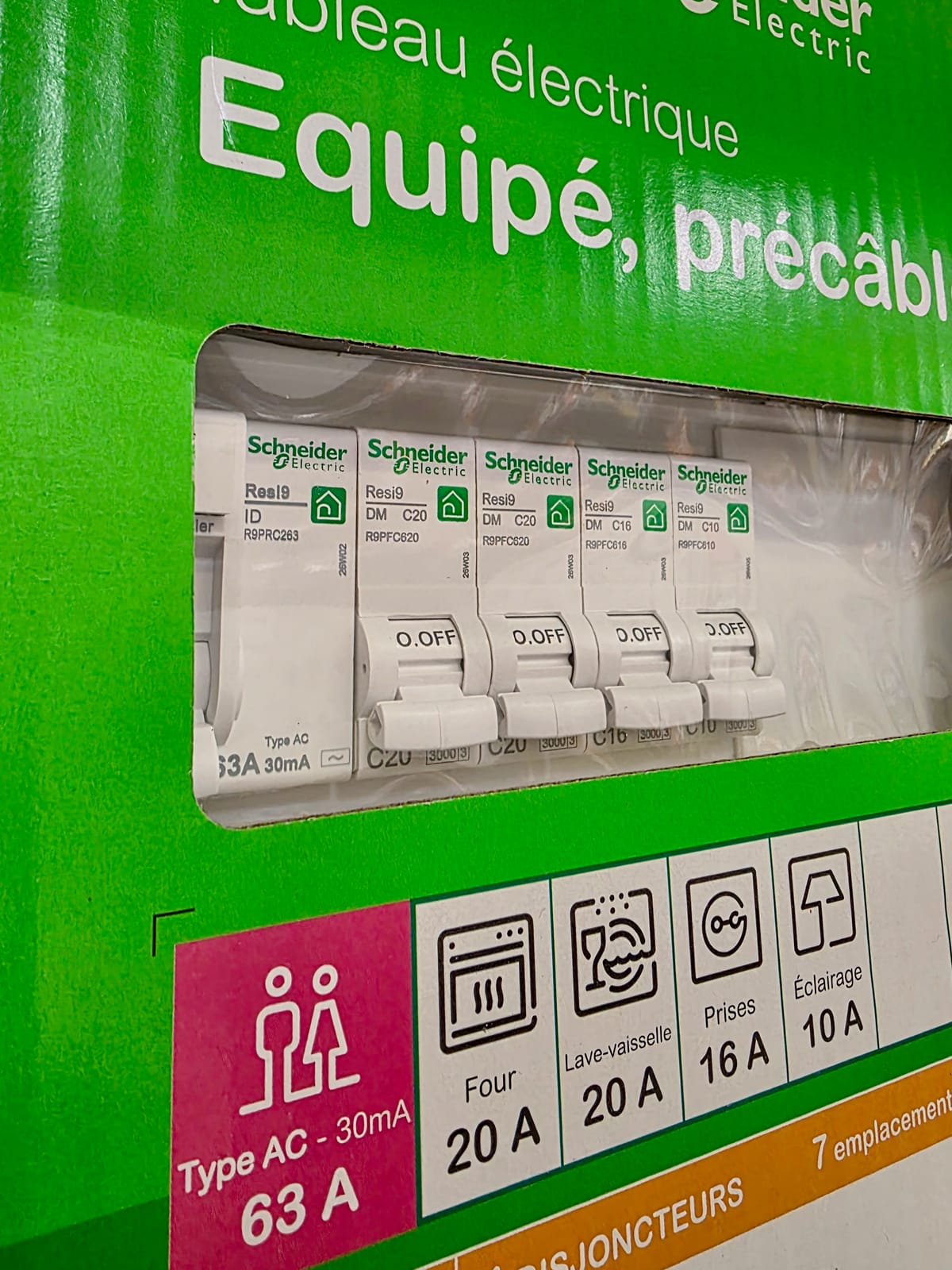
Pre-wired consumer unit
The common layout reads at a glance: the 30 mA RCD at the head of the row and the circuit breakers that feed each circuit.
There are several types of RCD used in UK homes. Type AC is obsolete in most homes. Type A is the standard for modern homes. Type F is used for some appliances with variable-speed drives. Type B is required for EV chargers and solar. The S-Type, time delayed, is used as the main incomer RCD.
RCBOs also come in different types. A single-module RCBO is slim and modern. A double-module RCBO is older and bulkier. Type A RCBOs are the standard choice in homes, while Type B RCBOs are specialised for EV and solar use.
The type matters because different circuits produce different fault currents. A circuit feeding an EV charger or solar inverter can produce DC fault currents that a standard Type A device may not detect reliably, which is why the Type B device is specified for those circuits.
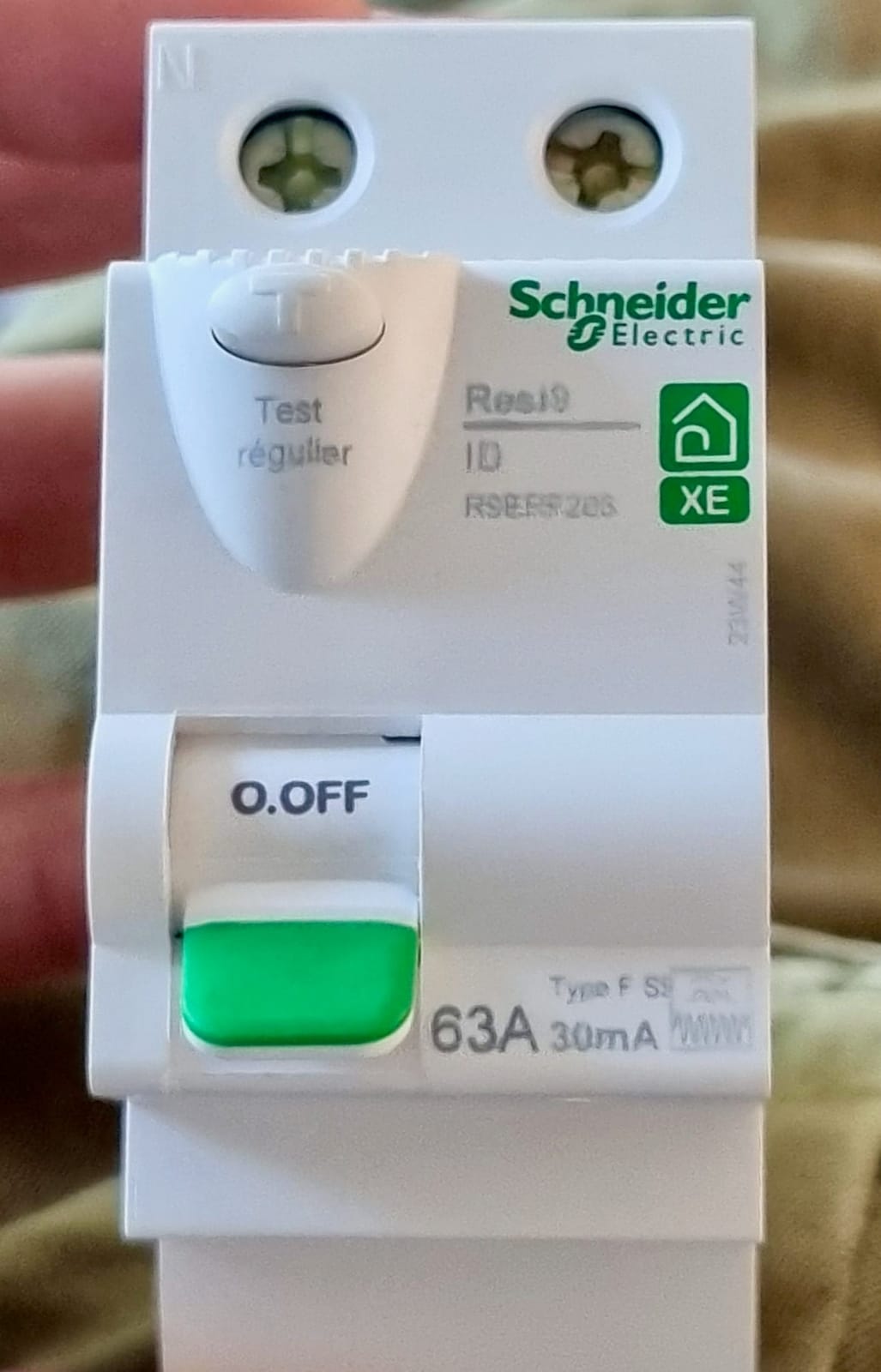
Type F RCD
The type is printed on the front face: type F for circuits with variable-speed drives, 30 mA for personal protection.
The cost difference between an RCD and an RCBO is small per device. In 2026, an RCD costs about 18 to 45 £ for the device and 60 to 120 £ installed. An RCBO costs 22 to 55 £ for the device and 60 to 140 £ installed. A full RCBO board upgrade runs 380 to 780 £ for the material and 520 to 950 £ installed.
The cost comparison is not just about the device price. An RCD protects several circuits, so a board with two RCDs protects the whole installation with a small number of devices. An RCBO board uses one device per circuit, which costs more in material but avoids the disruption of whole-row trips. Over the life of the installation, the RCBO board often pays for itself in reduced nuisance trips and easier fault-finding.
If you are upgrading your consumer unit in 2026, RCBOs are the best choice. You should choose RCBOs if you want maximum protection, less nuisance tripping, safer modern electrics, and clearer fault identification.
Dual RCD setups are still safe and widely used, but they are gradually being replaced by RCBO-only boards, especially when combined with SPDs. The RCBO-only board is the direction the regulations and the trade are moving, and it is the choice that gives the best balance of safety and convenience.
An RCD works by comparing the current leaving on the live conductor with the current returning on the neutral. In a healthy circuit, the two values match. If some current leaks to earth through a person, a damaged cable, or moisture, the return current is lower than the outgoing current, and the difference is the residual current.
The RCD measures this difference with a current transformer and opens the circuit when the residual current crosses the device sensitivity, typically 30 mA for personal protection. The reaction is almost instantaneous, which is what makes the RCD effective at preventing serious injury.
The key point is that the RCD does not need to know where the leak is. It only needs to detect that a difference exists. That is why a small leak on one circuit can trip an RCD that protects several circuits: the device is doing its job, but the fault is somewhere in the group.
An MCB, or miniature circuit breaker, protects the wiring against overload and short circuit. It measures the current flowing through the circuit and opens when the current exceeds the device rating for long enough to heat the cable. A short circuit produces a very high current that trips the MCB almost instantly.
The MCB is sized to the cable, not to people. Its trip thresholds are far above the level that is dangerous to a person, which is why the RCD is added for shock protection. The two devices work together: the MCB protects the wiring, the RCD protects people.
An RCBO puts both functions in one unit. It measures both the current and the balance between live and neutral, so it can respond to an overload, a short circuit, or an earth leak. That is the practical meaning of three types of protection in one device.
The nuisance trip is the most common reason homeowners ask about RCBOs. With a dual RCD board, one RCD protects a whole row of circuits. A single faulty appliance, a damp outdoor socket, or a worn cable on one circuit can drop power to every circuit behind that RCD.
The result is that the whole kitchen and the upstairs sockets go off because of one fault in the garage. Finding the source means unplugging appliances across several circuits and testing each one. With an RCBO board, the same fault drops only the garage circuit, and the rest of the home keeps working.
This is not just a convenience issue. A whole-row trip at night can cut power to a freezer or a medical device. The RCBO design limits the impact of any single fault to the circuit where it occurs.
Fault-finding is where the RCBO shows its biggest practical advantage. When an RCD trips, the electrician has to isolate each circuit behind the RCD to find which one holds the fault. That means switching circuits off and on one at a time, which is slow and can be disruptive.
When an RCBO trips, the circuit is identified immediately. The electrician knows exactly which circuit to test, and the diagnostic is focused from the start. The time saved on fault-finding is one of the reasons the trade prefers RCBO boards.
The same logic applies to the homeowner. With an RCBO board, you can tell the electrician which circuit tripped, and they arrive with a clear starting point. With a dual RCD board, the starting point is the whole row.
A dual RCD board is not unsafe. It remains a compliant and widely used arrangement, and many homes run perfectly well on it for years. The RCD protection is real, and the board meets the regulations.
The practical question is whether the nuisance trips and the harder fault-finding are worth avoiding. For a home with many circuits, or with circuits that are prone to small leaks, the RCBO board is worth the extra cost. For a simple installation with few circuits, a dual RCD board can be perfectly adequate.
The decision also depends on the age of the board. If the consumer unit is being replaced anyway, the extra cost of RCBOs is small relative to the total job, and the benefits are permanent. If the board is recent and working well, there is no urgent reason to change it.
Surge protection devices, or SPDs, are increasingly fitted in consumer units alongside RCDs and RCBOs. An SPD protects the installation against voltage surges from lightning or the network. The APM guide on choosing a consumer unit treats RCD, RCBO and SPD as the three decisions to make together.
The trend in modern boards is to combine RCBO protection with an SPD. The RCBOs provide discrimination between circuits, and the SPD protects the whole installation against surges. This combination is what the trade now considers the modern standard for a consumer unit upgrade.
Before deciding between an RCD and an RCBO, ask your electrician a few specific questions. First, how many circuits does the board have, and how are they grouped behind the RCDs? Second, are there any circuits that are prone to small leaks, such as outdoor circuits or circuits feeding appliances with heating elements? Third, what is the cost difference between a dual RCD board and an RCBO board for your installation?
The answers will usually point to the right choice. For most upgrades, the RCBO board is the better long-term investment. For a simple rewire with few circuits, the dual RCD board can be the sensible option. The important thing is to make the decision with the facts, not on the basis of the device price alone.
The RCD has been protecting UK homes for decades, and its role has grown as the regulations tightened. Originally used mainly for outdoor circuits and bathrooms, RCD protection is now required across most of the domestic installation. The 18th Edition of BS 7671 extended the requirements further, which is why modern boards are full of RCD and RCBO devices.
The RCBO is a more recent development. By combining the RCD and the MCB in one module, it solved the two practical problems of the dual RCD board: whole-row trips and hard fault-finding. As the price of RCBOs fell, they moved from a specialist option to the default choice for new boards.
The direction of the trade is clear. New consumer units are increasingly RCBO-only, and the dual RCD board is becoming the older arrangement. That does not make the dual RCD board unsafe, but it does mean the RCBO board is the one the regulations and the industry are moving towards.
Both RCDs and RCBOs have a test button that should be operated at the recommended interval. The test button injects a test current that simulates an earth fault and forces the device to operate. If the device trips, the detection and the mechanical mechanism are working.
The test does not prove that the wiring or the connected appliances are fault-free. It only proves that the protective device itself can detect a fault and open the circuit. That is why the test is a complement to, not a replacement for, proper inspection and testing of the installation.
For an RCBO, the test button checks the residual current function. The overload and short-circuit functions are tested as part of the installation testing, using the appropriate test instruments. The results are recorded on the electrical installation certificate.
The first mistake is choosing the wrong type of device for the circuit. An EV charger or solar inverter needs a Type B device, and fitting a Type A device leaves the circuit without the protection it needs. The type must match the fault currents the circuit can produce.
The second mistake is treating the RCD and the RCBO as interchangeable. They are not. An RCD protects several circuits against earth leakage only. An RCBO protects one circuit against earth leakage, overload and short circuit. Swapping one for the other changes the protection of the whole board.
The third mistake is ignoring the nuisance trip problem. A homeowner who keeps resetting a tripping RCD without finding the cause is masking a fault. The RCBO board does not remove the fault; it only limits the impact and makes the fault easier to find.
The cost of an RCBO board is slightly higher than a dual RCD board, but the long-term value is real. Every time a fault trips only the affected circuit instead of the whole row, the homeowner saves the disruption and the cost of finding the source across several circuits.
The value also shows in the resale and inspection picture. A modern RCBO board with an SPD is what an electrical inspection expects to see in a recently upgraded installation. It is the arrangement that gives the clearest evidence that the installation is up to date.
For most homeowners, the question is not whether the RCBO board is better, but whether the extra cost is worth it for their situation. For a board that is being replaced anyway, the answer is almost always yes.
Yes. An RCBO offers three layers of protection instead of one: shock protection, overload protection and short-circuit protection. It also trips only the faulty circuit, so the rest of the home keeps power.
Most RCD trips are caused by faulty appliances, moisture, damaged wiring or earth leakage faults. Because one RCD protects multiple circuits, it can be hard to track down the source, which is why RCBOs are preferred for easier fault-finding.
No, but RCBO-only boards are now the preferred choice due to better discrimination, fewer trips and clearer fault finding. Dual RCD setups remain safe and widely used.
Most EV chargers require a Type B RCD or equivalent protection, because they can produce DC fault currents that a standard Type A device may not detect reliably. Your electrician will confirm the correct device.
A full RCBO board upgrade runs about 380 to 780 £ for the material and 520 to 950 £ installed. The per-device cost of an RCBO is only slightly higher than an RCD.

Théo Desrousseaux
Electrician and editor
I work in the field and edit this magazine. Every guide is reviewed for its target country before publication.
Sources and references
Practical electrical installation guides, diagnostic methods and tool recommendations compared against the technical wiring standards of this national edition.
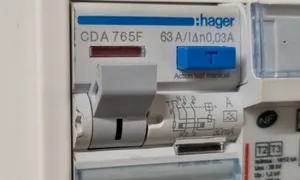
Why does an RCD keep tripping? Learn the common causes, the 30 mA threshold, the six-month test rule, and how to diagnose the fault safely.
Read the guide Guide UK 13 amp socket types BS 1363 explained What are the UK 13 amp socket types? Learn the BS 1363 plug, the fuse in the plug, safety shutters, the Type G standard, and how the system works. Read the guide
  Guide Best multimeter for electricians UK What is the best multimeter for electricians in the UK? Compare the Fluke 87V, Fluke 117, Klein MM700 and Brymen BM235, with prices, CAT ratings and True RMS. Read the guide
  Guide Ring main circuit wiring UK BS 7671 How does a UK ring main circuit work? Learn the BS 7671 433.1.204 rule, the 100 m² limit, the 32 A protection, spurs, and how the circuit is wired. Read the guide